
Brick Repair in Southlake, TX
Brick Fix Solutions specializes in structural residential masonry repair for Southlake homes. We diagnose and repair failing steel lintels, cracked and sagging brick archways, structural brick cracking, expansion-related movement, and damaged masonry around windows, doors, and large architectural openings.
The goal is not to hide the visible crack. We determine what allowed the masonry to fail, correct the repairable condition behind it, and rebuild the brickwork with proper support and close attention to brick match, mortar color, alignment, and finished appearance.
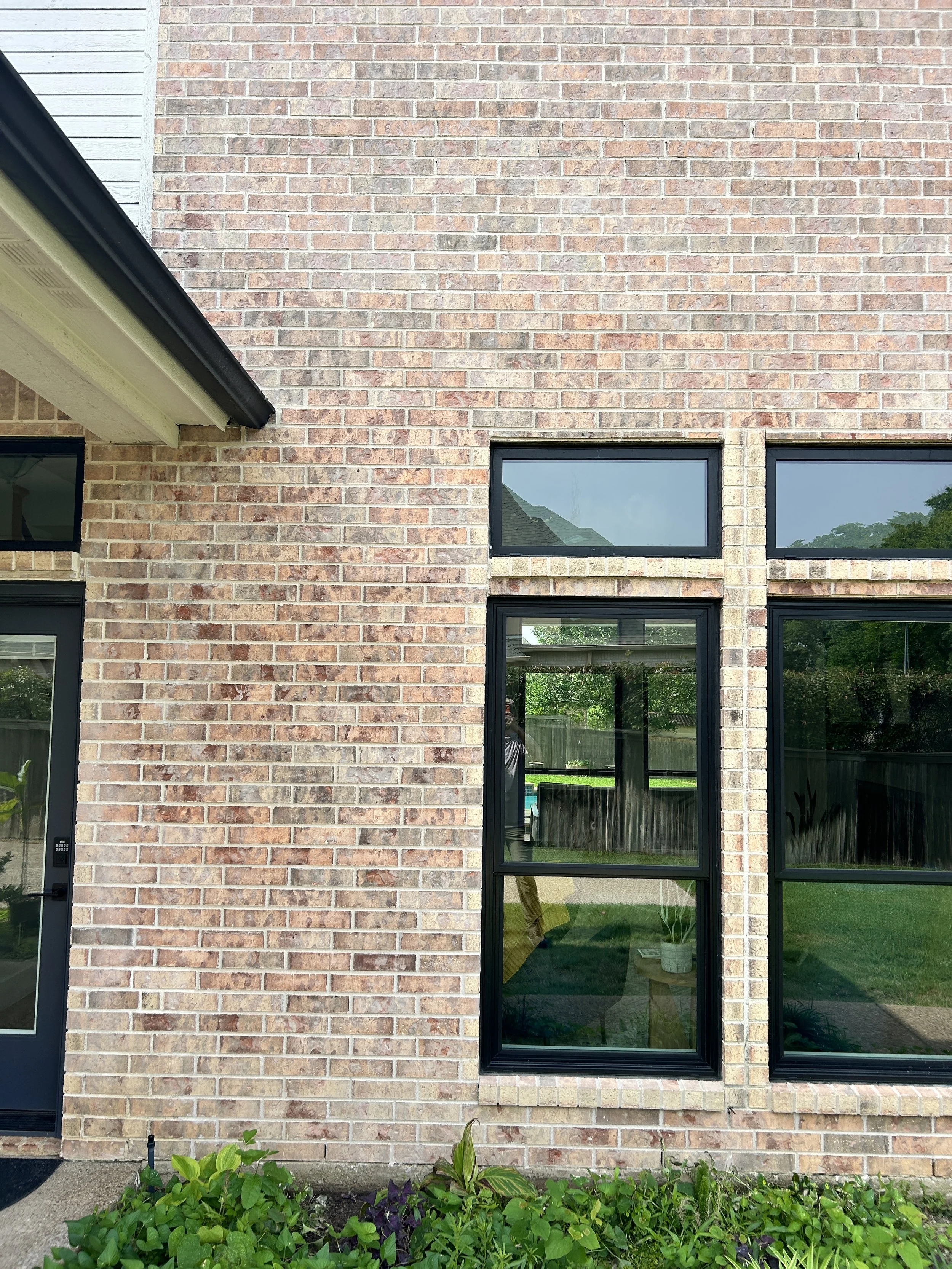
Structural Brick Repair for Southlake Homes
Cracked brickwork is often only the visible symptom of a larger masonry condition. Steel support above an opening may be inadequate, an archway may be losing stability, expansion may be restricted, or movement may be concentrating stress through one section of the wall.
We evaluate the damaged area as part of the entire masonry system instead of treating the crack by itself. The repair method is then built around what is actually allowing the brickwork to move, separate, sag, or fail.
Once the cause is identified, the goal is to restore proper support and reconstruct the affected masonry with close attention to brick selection, mortar color, bond pattern, joint profile, alignment, and the finished appearance of the home.
Cracked Brick & Mortar
Structural and localized cracking evaluated by pattern, location, surrounding movement, and wall conditions.
Failing Steel Lintels
Repair or replacement of steel that is undersized, deteriorated, improperly supported, or lacking adequate bearing.
Cracked or Sagging Archways
Stabilization and reconstruction of brick arches that have cracked, dropped, shifted, or begun to separate.
Expansion & Wall Movement
Repair of failed movement joints and masonry conditions where expansion or concentrated stress is contributing to cracking.
What Brick Cracking Can Tell You About the Wall
The shape and location of a crack can provide important clues about what is happening within the masonry. Cracking above an opening, movement through an archway, stair-step patterns, and separation at corners can all point to different underlying conditions.
Cracks Above Windows & Doors
Cracking above an opening can develop when a steel lintel is undersized, lacks adequate bearing, has deteriorated, or is no longer supporting the masonry correctly.
WHY BRICK CRACKS ABOVE WINDOWS →Stair-Step Cracking
A stepped crack following mortar joints can indicate movement within the wall, settlement, expansion stress, or a localized structural condition that should be evaluated before the joints are simply repointed.
UNDERSTANDING STAIR-STEP CRACKS →Cracked or Sagging Brick Archways
Open joints, displaced brick, separation near the spring points, or a dropping center can indicate that an archway is losing the support required to remain stable.
WHY BRICK ARCHWAYS FAIL →Signs of a Failing Steel Lintel
Horizontal cracking, separation above an opening, displaced brick, or visible movement near the ends of the steel can indicate that the lintel is no longer performing as intended.
SIGNS OF LINTEL FAILURE →Movement at Corners & Wall Returns
Cracking near a corner or wall return can develop where adjoining sections of masonry move differently, where stress becomes concentrated, or where the veneer has begun to separate.
Failed or Missing Expansion Joints
Masonry needs room to move. When an expansion joint has failed, hardened, or was never installed where movement is occurring, stress may transfer into nearby brick and mortar instead.
Two cracks that look similar from a distance can require completely different repairs. The repair should be based on the movement pattern, support conditions, and surrounding masonry — not on the crack alone.
Steel Lintel & Brick Archway Repair in Southlake
Large masonry openings place significant loads on the support beneath the brickwork. When a steel lintel is too short, deteriorated, improperly installed, or lacking adequate bearing — or when an architectural brick arch begins to lose stability — the surrounding masonry can crack, separate, and eventually begin to drop.
When the Steel Above the Opening Is Failing
Steel lintels carry the masonry above windows, doors, walkways, garages, and other large openings. If the steel does not extend far enough onto the supporting masonry, begins to corrode, deflects under the load, or was undersized from the beginning, cracking may develop above and beside the opening.
A structural repair can require temporarily supporting the masonry with heavy-duty shoring, carefully dismantling the brickwork, removing the failed steel, installing a properly sized replacement with adequate bearing, and then rebuilding the original masonry above the opening.
When an Arch Begins to Crack, Sag or Separate
Brick archways rely on geometry, bearing, and proper structural support to remain stable. When that support begins to fail, cracks may develop through the joints, brick can separate near the ends of the arch, and the center of the opening may begin to drop.
Depending on the condition, repair may involve supporting the surrounding masonry, dismantling the failed arch, installing or correcting the structural support, and reconstructing the opening to restore its original shape and appearance.
Support the masonry first. Correct the failed structural condition. Then rebuild the brickwork around a properly supported opening instead of simply repairing the cracks created by the failure.
Repair the Cause, Not Just the Crack
A crack tells us where the masonry released stress — not necessarily why it happened. Before rebuilding damaged brickwork, the surrounding wall, structural support, openings, movement joints, and cracking pattern should be evaluated to determine what repair actually makes sense.
Read the Cracking Pattern
We look at where the damage starts, how it travels through the brick and mortar, and whether the pattern points toward movement, support failure, or a localized masonry condition.
Evaluate the Support
Steel lintels, archways, wall returns, bearing points, expansion joints, and nearby openings are evaluated for conditions that may be contributing to the damage.
Correct the Condition
If inadequate steel, failed bearing, uncontrolled movement, loose veneer, or another repairable condition is identified, that issue is addressed before the masonry is finished.
Rebuild the Masonry
The damaged area is reconstructed with attention to brick match, mortar color, joint profile, alignment, bond pattern, and the appearance of the surrounding home.
Cosmetic repair focuses on making the crack disappear. Structural masonry repair focuses on understanding why the damage developed, correcting the repairable condition behind it, and then rebuilding the wall properly.
Southlake Masonry Repair Project
This Southlake project included a full-height masonry movement joint along with several areas of deteriorated mortar. The movement joint was restored with flexible polyurethane, while the remaining damaged mortar joints were ground out, cleaned, and repointed with new mortar matched to the existing masonry.
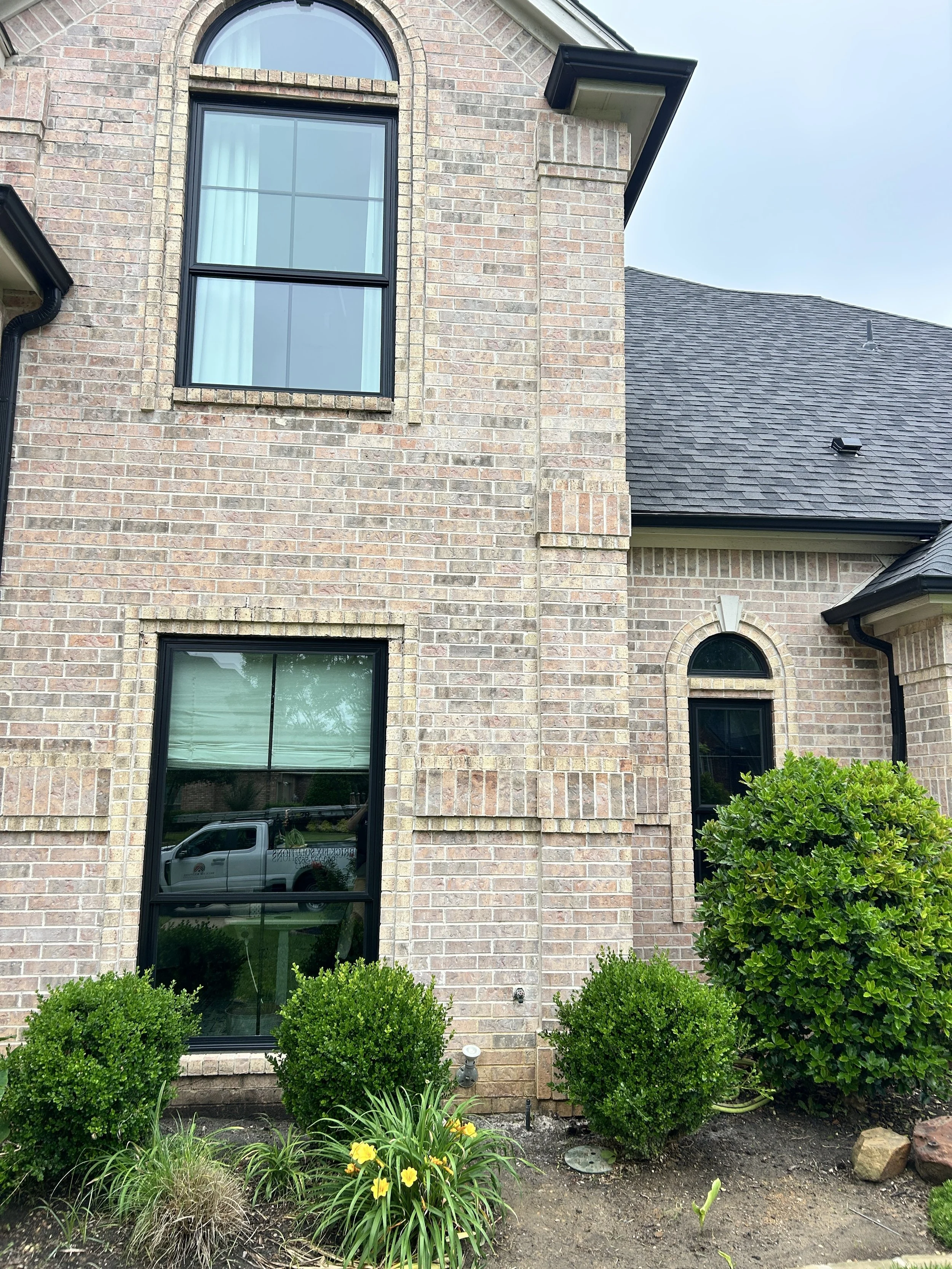
Polyurethane Where Movement Was Needed. Mortar Where Mortar Belonged.
The tall joint running through the masonry was a movement joint, so that area needed to remain flexible. The failed material was removed, the joint was cleaned, and color-matched polyurethane was installed.
The other areas on the home were traditional mortar repairs. Those joints were not filled with polyurethane and the existing failed mortar was not left behind. The damaged mortar was ground out before the joints were cleaned and repointed with fresh mortar.
Each area was repaired with the material that belonged there, while keeping the finished work as close as possible to the original masonry appearance.
Full-Height Polyurethane Joint
The tall movement joint was opened and cleaned before flexible polyurethane was installed. The sealant color was selected to closely match the existing mortar while allowing movement between the adjoining masonry sections.
Grind Out and Repoint
The remaining problem areas were traditional mortar joints. Failed material was ground out to sound masonry, the joints were cleaned, and fresh mortar was installed and tooled to blend with the existing brickwork.
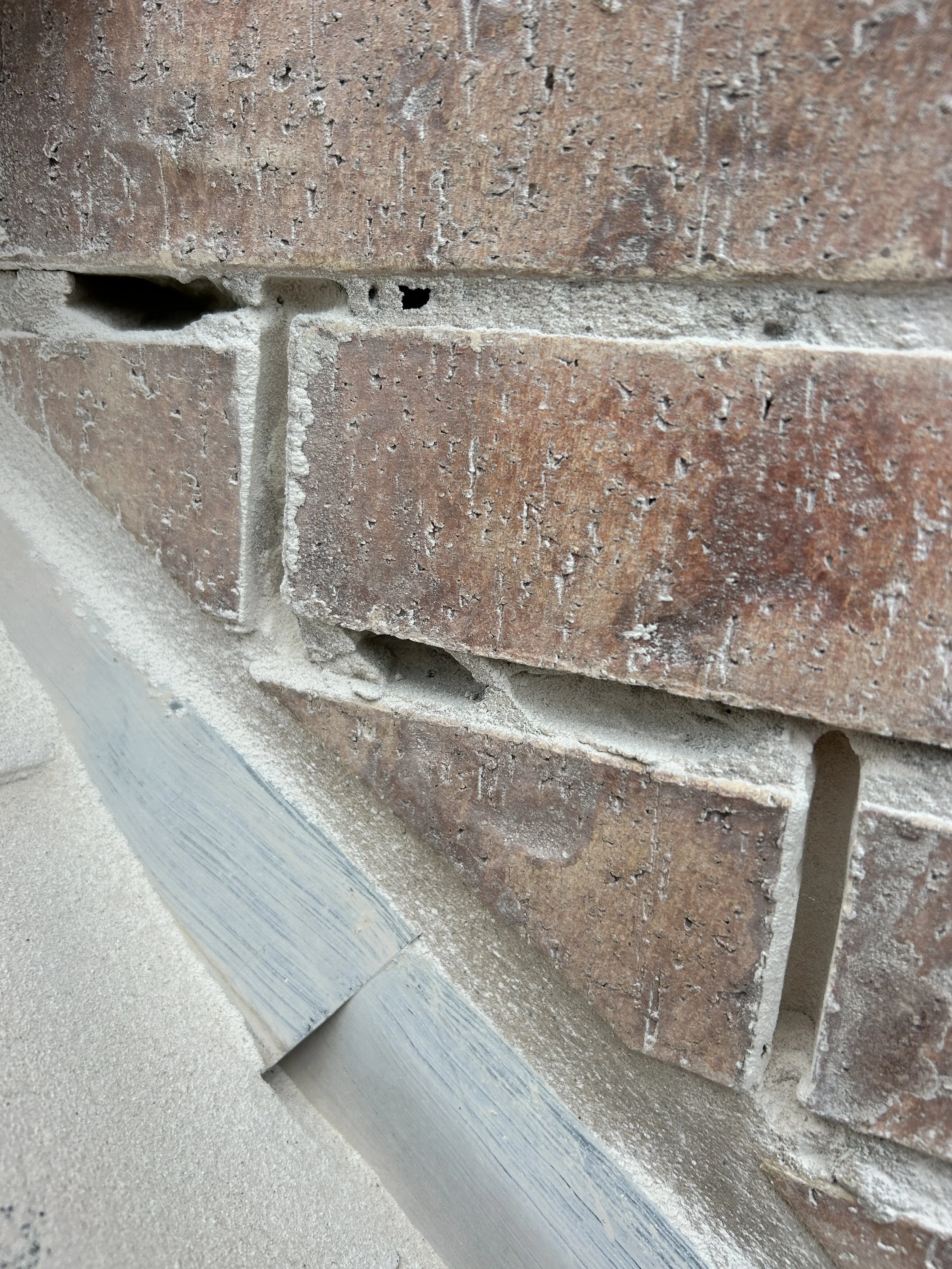
The Existing Mortar Was Still Ground Out
This photo shows the condition of one of the mortar repair areas before the work was fully completed. The deteriorated and uneven mortar visible here was still ground out. The joints were then cleaned before new matching mortar was installed and tooled into the brickwork.
Mortar Repairs Across the Home
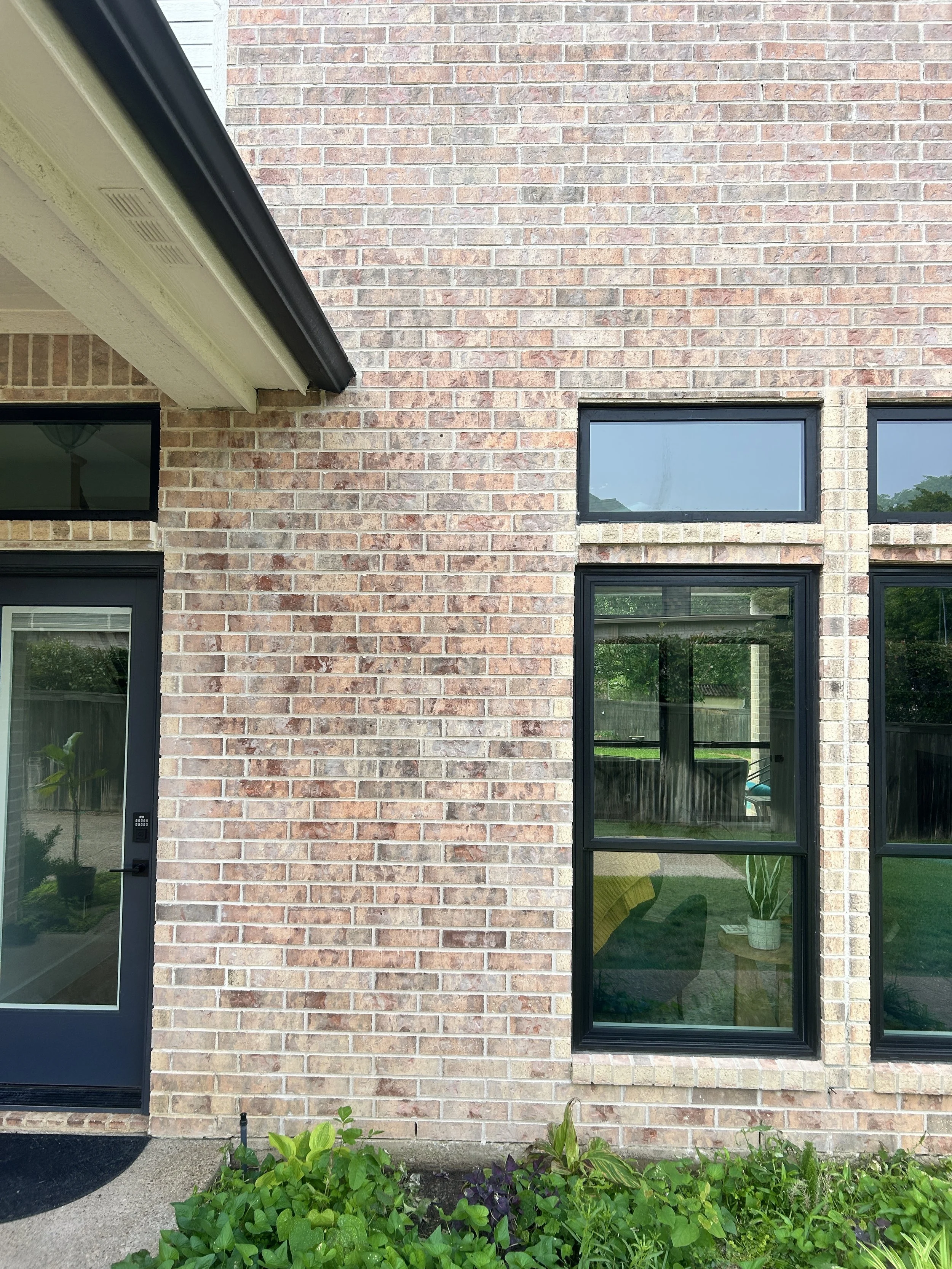
Failed Mortar Removed and Replaced
The failed mortar in this section was ground out, the joints were cleaned, and fresh matching mortar was installed to restore the masonry without leaving the old repair behind.
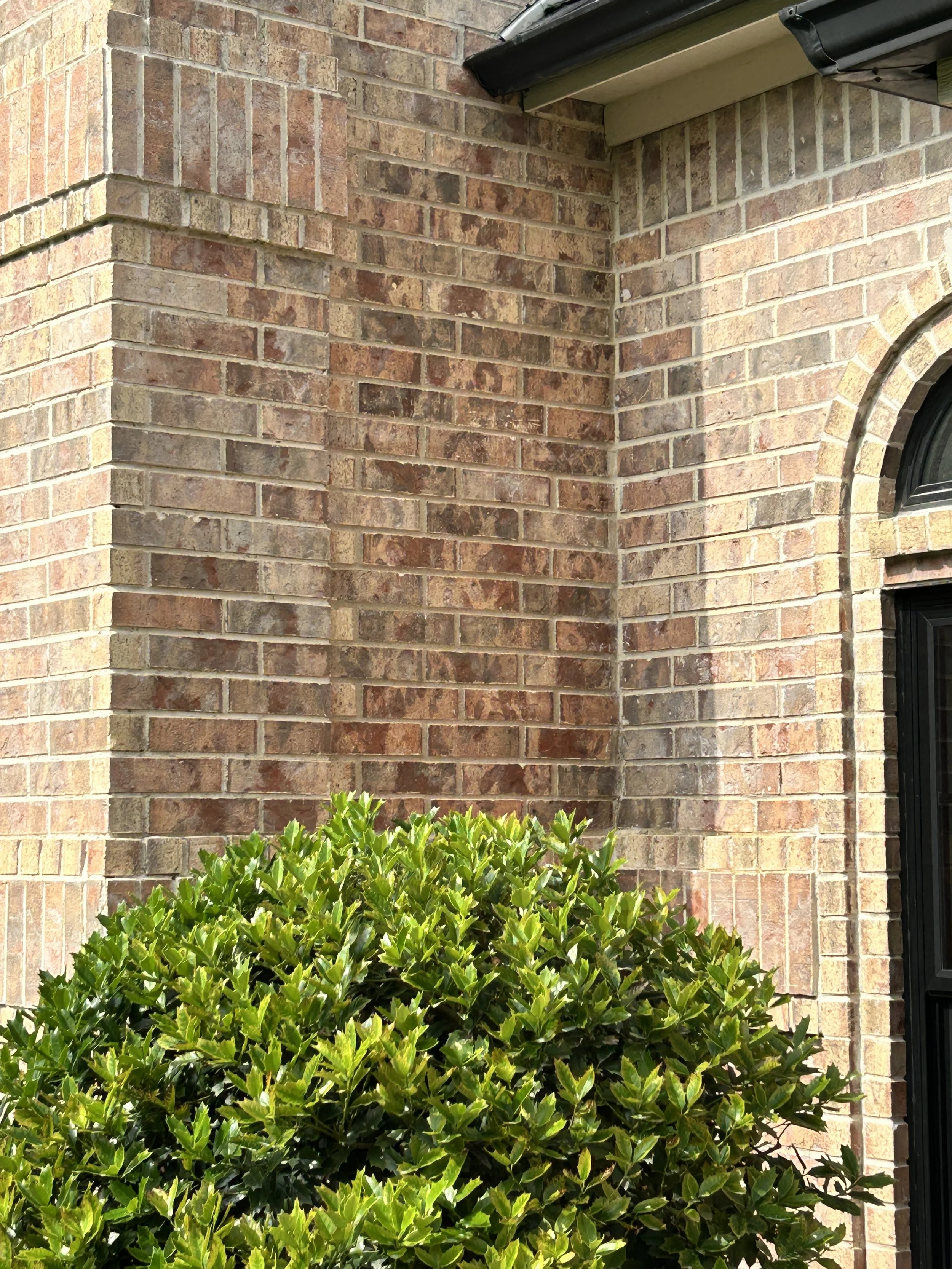
Repointing Through the Wall Return
This area was repaired with mortar. The damaged joints were ground out and repointed so the new work remained consistent through the change in direction at the masonry corner.
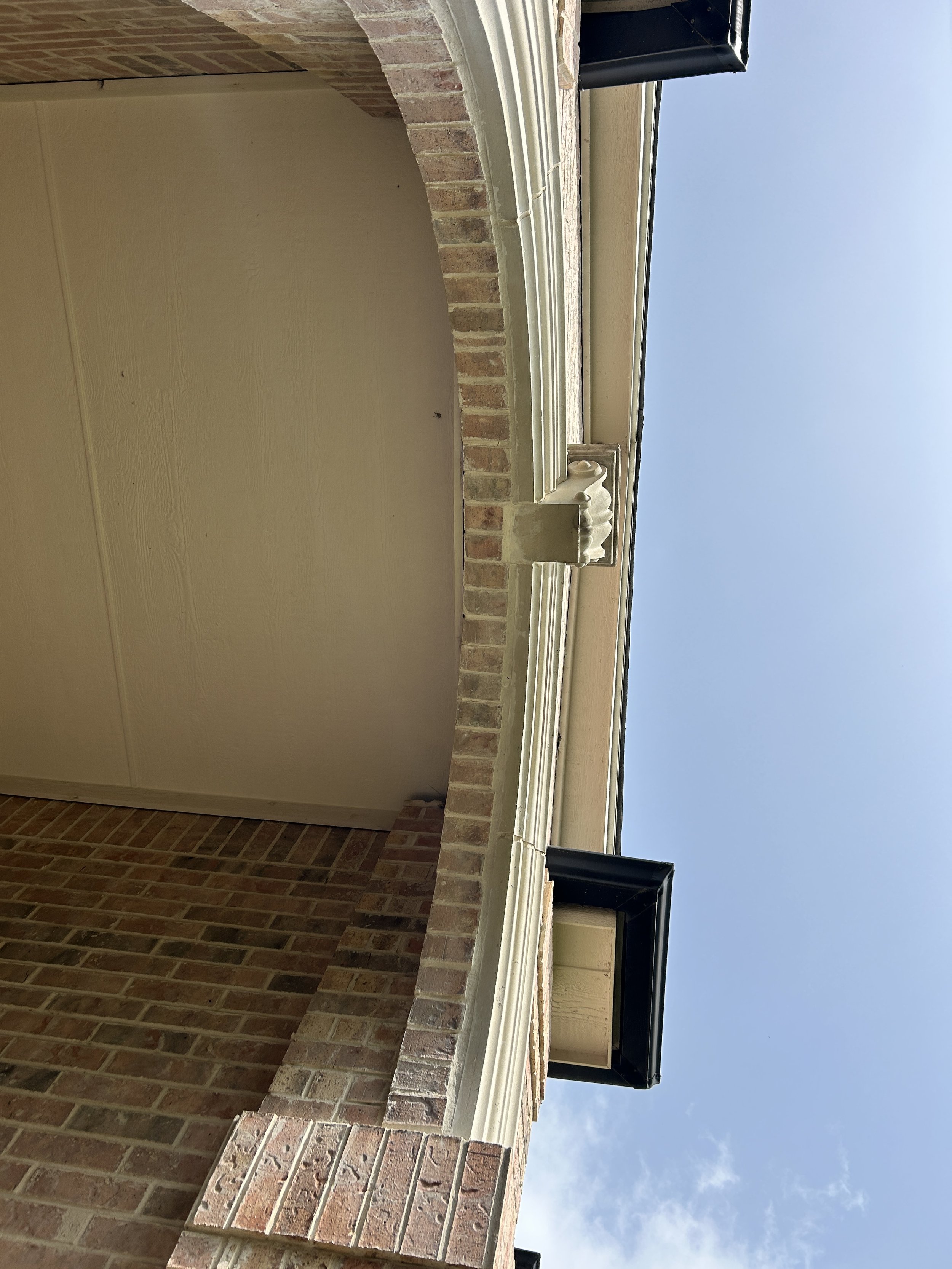
Ground Out and Repointed Around the Architectural Detail
This upper area was also repaired with mortar. The existing failed material was ground out before fresh mortar was installed and matched through the detailed brickwork and architectural transition.
Every photograph above is from this Brick Fix Solutions project in Southlake, Texas. The project included one full-height polyurethane movement joint along with multiple areas of mortar removal, joint preparation, and repointing across the home.
Questions Southlake Homeowners Ask About Brick Repair
Cracks that look similar can come from completely different conditions. These are some of the questions we look at when determining whether a masonry problem needs brick replacement, repointing, a movement joint, steel repair, archway reconstruction, or another type of structural repair.
Why is the brick cracking above my window?
Cracking above a window can be related to the steel lintel supporting the brick, inadequate bearing at the ends of the steel, wall movement, or stress developing around the opening. The support condition should be evaluated before the damaged masonry is repaired.
WHY BRICK CRACKS ABOVE WINDOWS →How do I know if a steel lintel is failing?
Common warning signs include cracking above an opening, brick beginning to drop or separate, horizontal joint movement, visible corrosion, and cracking near the ends of the steel. The lintel length, bearing, condition, and surrounding masonry all need to be considered.
SIGNS OF A FAILING STEEL LINTEL →Can you just fill a brick crack with mortar?
No. If the brick itself is cracked, the damaged brick should be removed and replaced. Smearing mortar over a fractured brick or packing mortar into the crack is not a proper brick repair. After the cause of the cracking is evaluated, the broken brick is cut out, a matching replacement brick is installed, and the surrounding mortar joints are rebuilt to match the existing masonry.
Why does a brick archway start to crack or sag?
Brick arches rely on their shape, bearing points, and structural support. When those conditions change, mortar joints can open, individual brick can move, and the center of the arch may begin to drop. The support should be corrected before the arch is rebuilt.
WHY BRICK ARCHWAYS FAIL →When should polyurethane be used instead of mortar?
Polyurethane belongs in a movement joint where the masonry needs the ability to expand and contract. Traditional mortar belongs in standard masonry joints that are intended to remain rigid. The material should be selected based on the function of the joint, not simply because a crack is visible.
Can old brick and mortar actually be matched?
Original brick can often be salvaged and reused during reconstruction. When replacement brick is required, the closest available match is selected. Mortar color, aggregate, joint profile, bond pattern, and surrounding masonry all affect how well the completed repair blends into the home.
Does every structural brick crack mean foundation trouble?
No. Foundation movement can cause brick cracking, but steel lintel problems, archway failure, thermal movement, missing expansion joints, poor bearing, and localized masonry conditions can create cracks as well. The cracking pattern and surrounding conditions need to be evaluated before assuming the foundation is responsible.
UNDERSTANDING STAIR-STEP CRACKS →How do you decide what type of brick repair a home needs?
We look at the cracking pattern, location of the damage, steel and archway support, bearing conditions, expansion joints, wall returns, surrounding openings, and condition of the existing masonry. The repair method should be based on what is actually failing rather than using the same repair for every crack.
Brick replacement, mortar repointing, polyurethane movement joints, steel lintel replacement, archway reconstruction, and masonry rebuilding all solve different problems. The right repair starts by determining what the wall actually needs.
Why Southlake Homeowners Choose Brick Fix Solutions
The finished appearance matters, but it comes after the repair itself is right. Our work is built around understanding the masonry condition, using the correct repair method, protecting the surrounding home, and rebuilding the damaged area so the repair performs properly and looks like it belongs there.
Structural Repair Experience
Our work includes steel lintel replacement, failing archway reconstruction, structural brick cracking, expansion joints, veneer stabilization, and masonry reconstruction — not just surface-level mortar repairs.
We Look for the Cause First
Cracking patterns, steel support, bearing, archways, wall returns, expansion joints, and surrounding masonry are evaluated before deciding how the damaged area should be repaired.
The Correct Material for the Repair
Cracked brick gets replaced. Failed mortar gets removed and repointed. Movement joints receive flexible sealant. Failed structural support is corrected before the masonry is rebuilt.
Matching Is Part of the Job
Brick selection, mortar color, aggregate, joint profile, alignment, bond pattern, and sealant color are considered so the completed work blends with the existing masonry instead of looking patched.
Original Brick Reused When Practical
During major reconstruction, existing brick can often be carefully dismantled, cleaned, and reused. Preserving original material can provide the closest possible match when rebuilding older masonry.
Workmanship We Stand Behind
Completed masonry repair and reconstruction work is backed by our 2-year workmanship warranty, with the repair scope clearly established before work begins.
Identify what failed. Use the correct repair method. Restore the support where needed. Match the existing masonry carefully. Leave the home with a repair that looks intentional — not patched.