
STEEL LINTEL REPAIR GUIDE
Signs of a Failing Steel Lintel
Steel lintels support the brick above windows, doors, and other masonry openings. When the steel corrodes, deflects, loses bearing, or can no longer support the masonry correctly, the damage often becomes visible long before the lintel completely fails. This guide explains the warning signs homeowners should watch for and what those signs may mean.
STEEL LINTEL BASICS
What Is a Steel Lintel? And Why Does It Matter?
A steel lintel is the structural support installed above a window, door, garage opening, or other break in a brick wall. Its job is to carry the weight of the masonry above the opening and transfer that load safely to the brickwork or structure on each side.
When a lintel is properly sized, supported, and installed, it can quietly do its job for years. But when the steel begins to corrode, deflect, lose bearing, or separate from the structure it is supposed to support, the brick above the opening can begin to crack, sag, shift, or pull apart.
That is why a failing lintel is more than a cosmetic masonry problem. Repointing the visible crack may temporarily improve the appearance, but it does not correct the support problem underneath. A lasting repair starts by determining why the lintel or surrounding structure is failing.
The crack is often the symptom. The lintel or structural support behind it may be the real problem.
THE MOST COMMON WARNING SIGNS
Warning Signs of a Failing Steel Lintel
Lintel problems usually develop gradually. The masonry often gives you warning before the steel completely loses its ability to support the brick above the opening. Some signs are subtle, while others indicate that the opening is already experiencing significant movement.
Cracking Above Windows or Doors
Horizontal, diagonal, or stair-step cracking around an opening can be one of the earliest visible signs that the masonry is being stressed. The crack may develop directly above the lintel or begin at one of the upper corners of the opening.
Sagging or Bowed Brick
A noticeable dip, bow, or uneven brick course above an opening can indicate that the lintel is deflecting or is no longer carrying the masonry evenly. This should not be treated as a simple mortar-joint problem.
Rust Staining or Visible Steel Corrosion
Brown or orange staining around the opening can be a sign that moisture is reaching the steel. As a lintel corrodes, the rust can expand and begin forcing the surrounding brick and mortar apart.
Separation Around the Opening
Gaps between the brick, lintel, window frame, or door frame can indicate that the masonry and structural support are no longer moving together. Open joints that continue to widen deserve closer inspection.
Loose, Shifted, or Displaced Brick
Brick that has moved forward, dropped, rotated, or no longer lines up with the surrounding wall can indicate a significant loss of support. At this stage, simply repointing the joints will not correct the underlying problem.
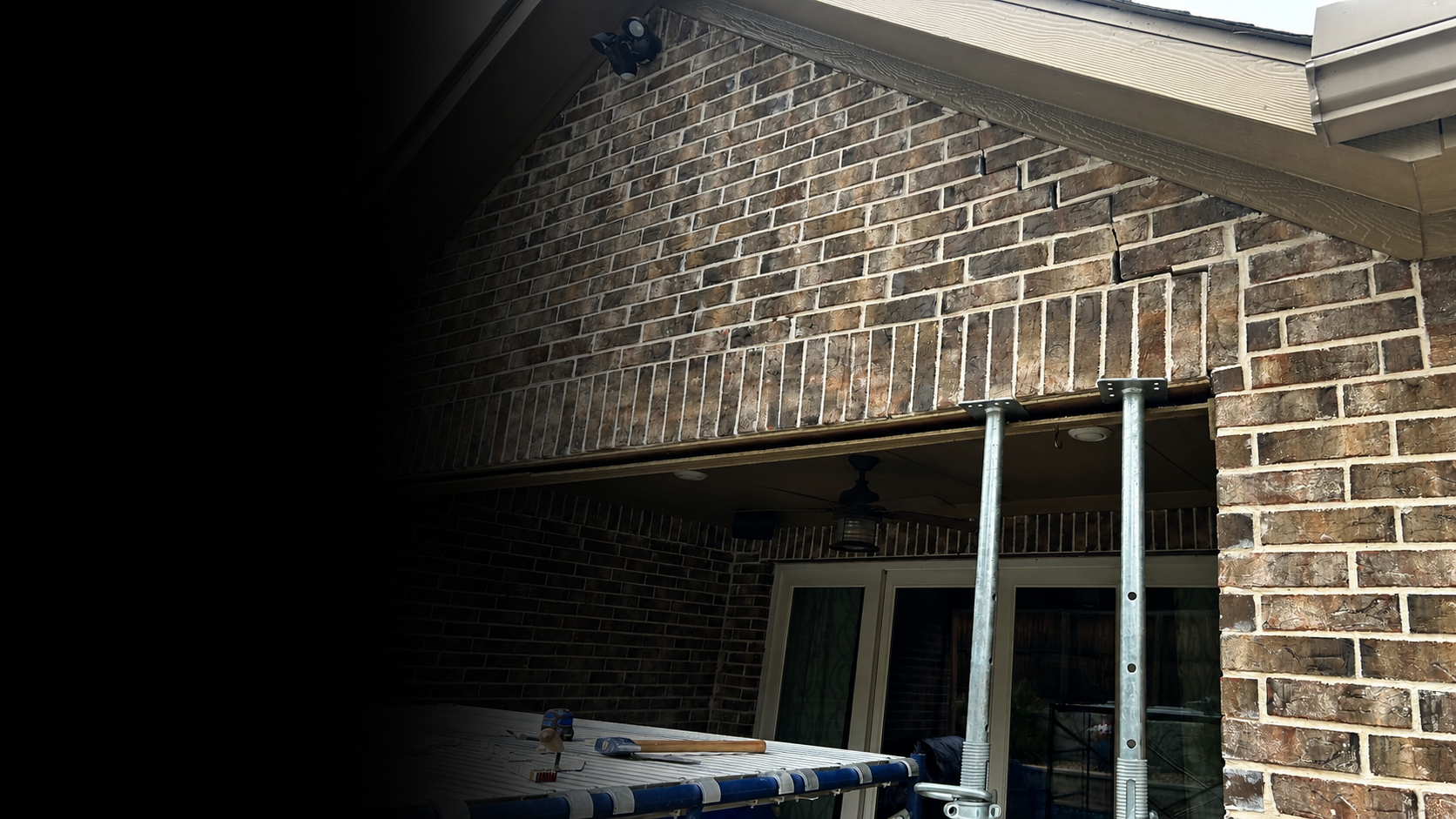
Cracking Near Rooflines or Brick-to-Roof Transitions
Cracking near a roofline can sometimes be caused by steel that is not properly attached or mechanically fastened into the framing where the roofline meets the brick. If that support is allowed to move independently, stress can transfer into the brick veneer and create recurring stair-step cracking, separation, or movement along the roofline.
A COMMONLY MISSED FAILURE POINT
Why Brick Cracks Along Rooflines
Brick cracking along a roofline is not always caused by foundation movement. In some homes, the problem begins where the masonry support at the roofline is supposed to connect back into the framing or supporting structure.
When steel at that transition is undersized, poorly supported, or not mechanically fastened into the framing as intended, it can move independently from the structure behind it. That movement places stress into the brick veneer and can create stair-step cracking, open joints, separation, or shifting masonry where the roofline meets the brick.
These cracks are often repointed repeatedly because the visible mortar joint looks like the problem. But if the steel or structural attachment behind the masonry is still moving, the crack can return. The repair needs to address the support and attachment first, then restore the damaged masonry.
- Stair-step cracking that follows the roof slope
- Separation where the roofline meets the brick
- Cracks that reopen after being repointed
- Brick shifting or pulling away near the transition
- Movement concentrated at the end of a roof or rake wall
Where the design requires the masonry support to tie back into the framing, inadequate attachment or missing mechanical fastening can allow the support to move independently and transfer stress into the brick veneer.
Recurring roofline cracks can be a sign of movement in the support behind the brick—not simply failed mortar.
Repairing What You Can See
Repointing removes deteriorated mortar and replaces it with new mortar. When the masonry itself is stable and the problem is limited to the joint, that may be exactly what the wall needs.
But if the lintel is corroding, deflecting, losing bearing, or moving independently from the structure, new mortar does not stop that movement.
- Improves damaged or deteriorated mortar joints
- Can restore appearance when the masonry is otherwise stable
- Does not correct failing steel or inadequate support
- Cracking may return if movement continues
Repairing What Is Causing the Damage
A structural repair starts by determining why the opening is moving. Depending on the condition, that can mean addressing corroded steel, inadequate bearing, lintel deflection, missing attachment, or another support problem.
Once the opening is properly supported, the damaged masonry can be rebuilt and the visible cracking repaired as part of the larger solution.
- Addresses the underlying cause of movement
- Restores proper support at the opening
- Repairs or replaces failing steel when necessary
- Rebuilds the masonry after the support problem is corrected
COSMETIC FIX OR STRUCTURAL REPAIR?
Why Repointing the Crack May Not Fix the Problem
The crack is what you see, but it is not always the actual failure. Repointing can be the correct repair when the problem is limited to deteriorated mortar. But when the masonry is moving because the lintel, bearing, or structural support is failing, replacing the mortar alone does not remove the cause of that movement.
If the support problem is still there, the crack can come back no matter how good the mortar repair looks.
HOW A PROPER LINTEL REPAIR IS DONE
What Proper Steel Lintel Repair Involves
The exact repair depends on why the lintel is failing, but the goal is always the same: restore proper support first, then rebuild the masonry around it. A lasting repair should correct the structural problem instead of simply hiding the visible damage.
Support the Masonry
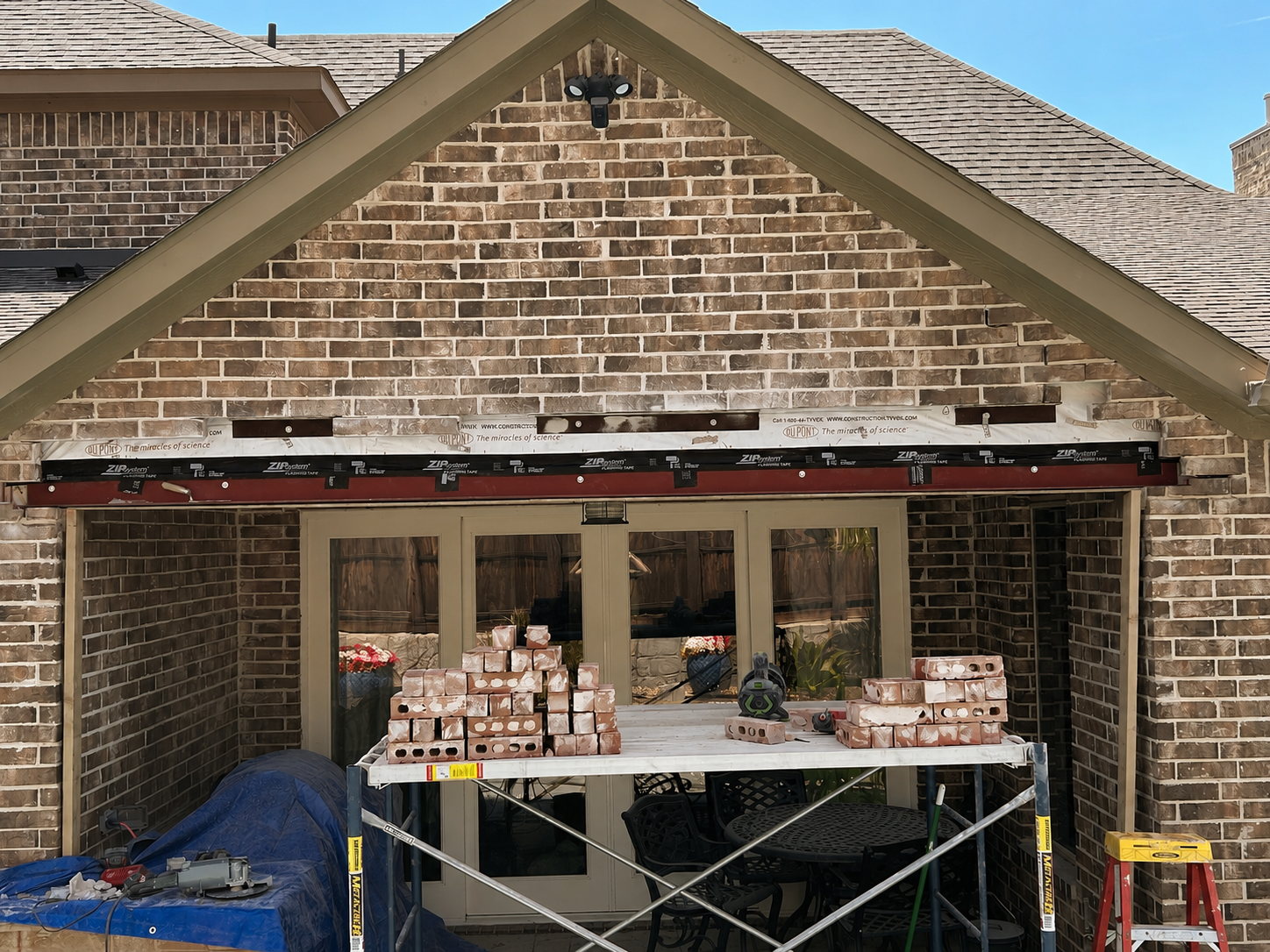
Before the failing lintel is removed or corrected, the brick above the opening must be properly supported. Temporary shoring helps carry the masonry load while the structural repair is being completed.
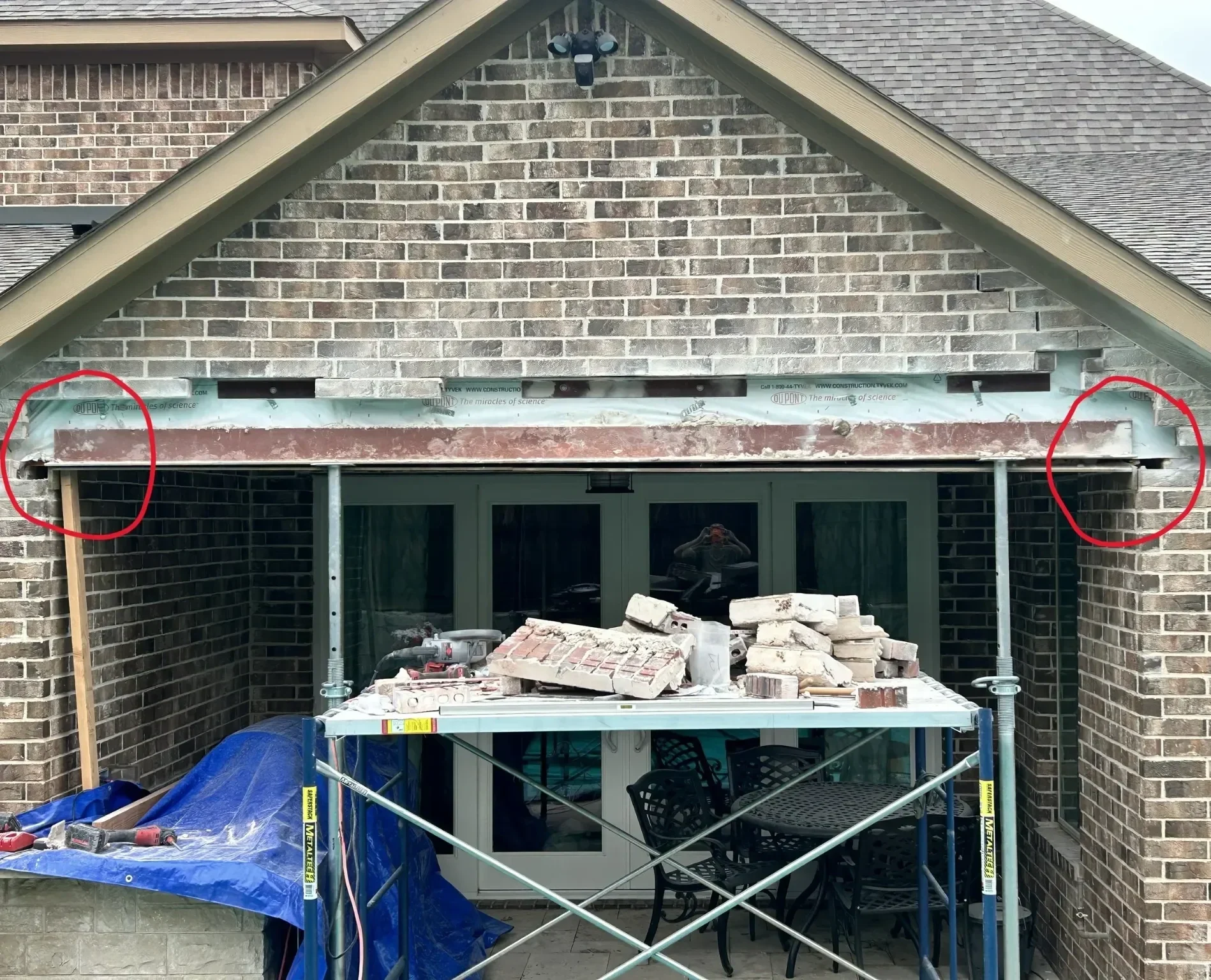
Remove or Correct the Failing Steel
Corroded, undersized, deflected, or poorly supported steel is exposed and evaluated. Depending on the condition, the lintel may need to be replaced, reinforced, or corrected so the opening can carry the masonry properly again.
Install Proper Structural Support
The repaired or replacement steel is properly sized, positioned, and supported for the opening. Where the design requires it, the steel must also be securely attached back into the framing or supporting structure so movement is not transferred into the brick veneer.
Rebuild the Brickwork
Once the opening is structurally supported, the removed or damaged masonry is rebuilt with proper alignment, bearing, mortar joints, and finishing so the repair performs correctly and blends back into the home.